Get 10% off your first order.
Sign up to get exclusive offers, product updates, and wellness tips delivered to your inbox.
This store requires javascript to be enabled for some features to work correctly.


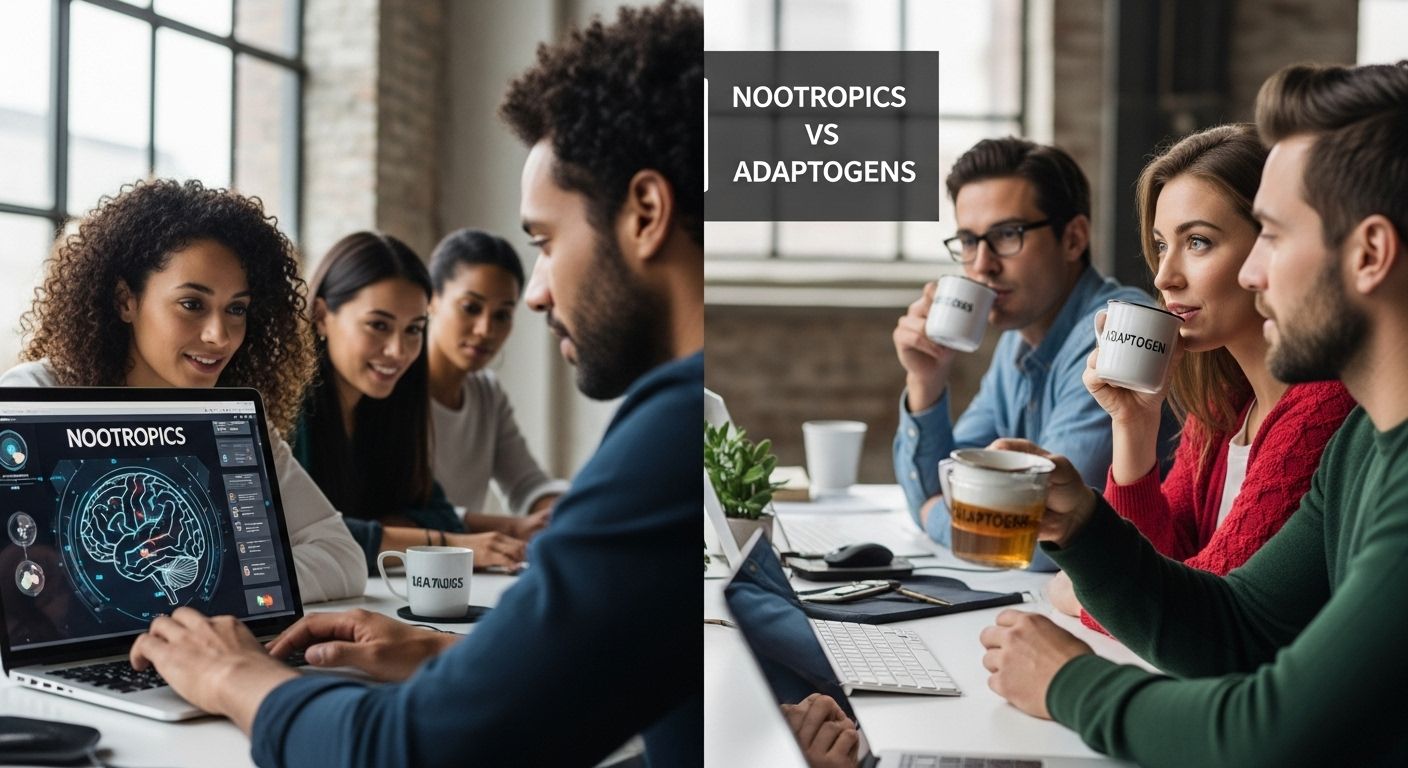
People talk a lot about brain boosters and stress relievers but they often lump everything together. What most folks miss is that brain-boosting nootropics and calming adaptogens are not just different labels for the same thing. In fact, nootropics and adaptogens each target unique systems in your body with separate scientific purposes and one NIH study even finds that nootropics focus on cognitive performance while adaptogens aim for stress resilience. The real surprise is that using the wrong one at the wrong time might actually hold you back instead of helping you thrive.
| Takeaway | Explanation |
|---|---|
| Nootropics enhance cognitive performance. | These substances aim to improve mental capabilities like memory, focus, and creativity in healthy individuals. |
| Adaptogens help manage stress responses. | These natural compounds regulate the body’s reaction to stress, promoting balance and resilience without significant side effects. |
| Consult healthcare professionals before use. | Individual responses vary greatly, so professional guidance is essential for safe and effective use of nootropics and adaptogens. |
| Nootropics and adaptogens serve different purposes. | Nootropics focus on enhancing cognitive functions, while adaptogens aim to support overall stress management and homeostasis. |
| Personalized wellness approaches are vital. | Consider your unique health conditions and biochemistry when integrating these substances into your wellness routine. |
Nootropics represent a fascinating category of substances designed to enhance cognitive performance and brain function. Often referred to as “smart drugs” or “cognitive enhancers,” these compounds aim to optimize mental capabilities in healthy individuals. Unlike traditional medications that treat specific conditions, nootropics focus on improving overall brain health and cognitive potential.
At their core, nootropics work by interacting with the brain’s neurochemical systems. Research from the National Institutes of Health reveals that these substances can facilitate several critical neurological processes:
These compounds can be derived from natural sources like herbs and mushrooms or synthesized in laboratories, offering diverse approaches to cognitive support. Some nootropics target specific brain functions such as memory formation, focus, creativity, or motivation.
Nootropics are not a monolithic category but encompass various substances with unique mechanisms. They generally fall into several broad classifications:
While the potential of nootropics is exciting, it is crucial to approach their use with informed caution. Individual responses can vary significantly, and consulting healthcare professionals before starting any cognitive enhancement regimen is always recommended. The goal of nootropics is not to create superhuman abilities but to support and optimize existing cognitive potential in a safe, sustainable manner.
Adaptogens represent a remarkable class of natural substances designed to help the human body manage and respond to stress more effectively. These unique compounds have been used for centuries in traditional medicine systems like Ayurveda and Traditional Chinese Medicine, offering a holistic approach to supporting the body’s resilience against physical, emotional, and environmental challenges.
Research from the National Institutes of Health reveals that adaptogens work by modulating the body’s stress response systems. Unlike quick-fix solutions, these natural compounds interact with the hypothalamic-pituitary-adrenal (HPA) axis and the sympathoadrenal system to promote a more balanced physiological response to stressors.
Key characteristics of adaptogens include:
Adaptogens are typically derived from specific plants and mushrooms known for their stress-mitigating properties. Some well-known examples include:
While adaptogens show promising potential in supporting stress management, it is essential to approach their use with a holistic perspective. They are not magic solutions but rather complementary tools in maintaining overall wellness. Individual responses can vary, and consulting healthcare professionals before incorporating adaptogens into one’s routine is always recommended.
The table below organizes several popular natural and synthetic nootropics and adaptogens mentioned in the article, showing their origin and primary effects.
| Substance | Type | Origin | Primary Effect |
|---|---|---|---|
| Ashwagandha | Adaptogen | Herb (Ayurveda) | Reduces cortisol, stress relief |
| Rhodiola Rosea | Adaptogen | Plant | Supports mental clarity, stress |
| Reishi Mushroom | Adaptogen | Mushroom | Modulates stress, immunity |
| Ginseng | Adaptogen | Root | Enhances energy, resilience |
| Lion[NULL]27s Mane | Nootropic | Mushroom | Cognitive support, memory |
| Prescription Nootropic | Nootropic | Synthetic | Brain function (varies by drug) |
While nootropics and adaptogens both aim to support human wellness, they operate through distinctly different mechanisms and target unique aspects of physiological functioning. Understanding their nuanced differences is crucial for individuals seeking targeted health optimization strategies.
Research from the National Institutes of Health highlights the fundamental distinctions between these two compound categories. Nootropics primarily focus on cognitive enhancement, targeting brain function, mental performance, and neurological processes. In contrast, adaptogens concentrate on stress management and overall physiological resilience.
Key distinctions include:
The underlying biological interactions of nootropics and adaptogens reveal their unique approaches to wellness. Nootropics typically work by:
Adaptogens, however, operate through different pathways:
While both compound types offer potential wellness benefits, they are not interchangeable. Nootropics are more narrowly focused on cognitive performance, whereas adaptogens provide a broader approach to managing physiological stress responses. Individual biochemistry plays a significant role in how these substances interact with the body, making personalized consultation with healthcare professionals essential before incorporating them into any wellness routine.
To help clarify the distinct roles and effects of nootropics and adaptogens, the following table compares their primary objectives, mechanisms of action, sources, and typical effects.
| Feature | Nootropics | Adaptogens |
|---|---|---|
| Primary Objective | Enhance cognitive performance | Help manage and balance the body7s stress response |
| Mechanism of Action | Modulate neurotransmitters, enhance neural communication | Regulate HPA axis, balance stress hormones |
| Typical Sources | Synthetic compounds, natural herbs, mushrooms | Natural herbs, roots, and functional mushrooms |
| Target | Brain functions: memory, focus, creativity | Whole-body stress resilience, homeostasis |
| Examples | Lion[NULL]27s Mane, certain prescription meds | Ashwagandha, Rhodiola Rosea, Reishi, Ginseng |
| Ideal Situations | Study, mental clarity, professional focus | Chronic stress, wellness, immune support |
| Key Benefit | Boosts mental performance | Promotes adaptation to stress |
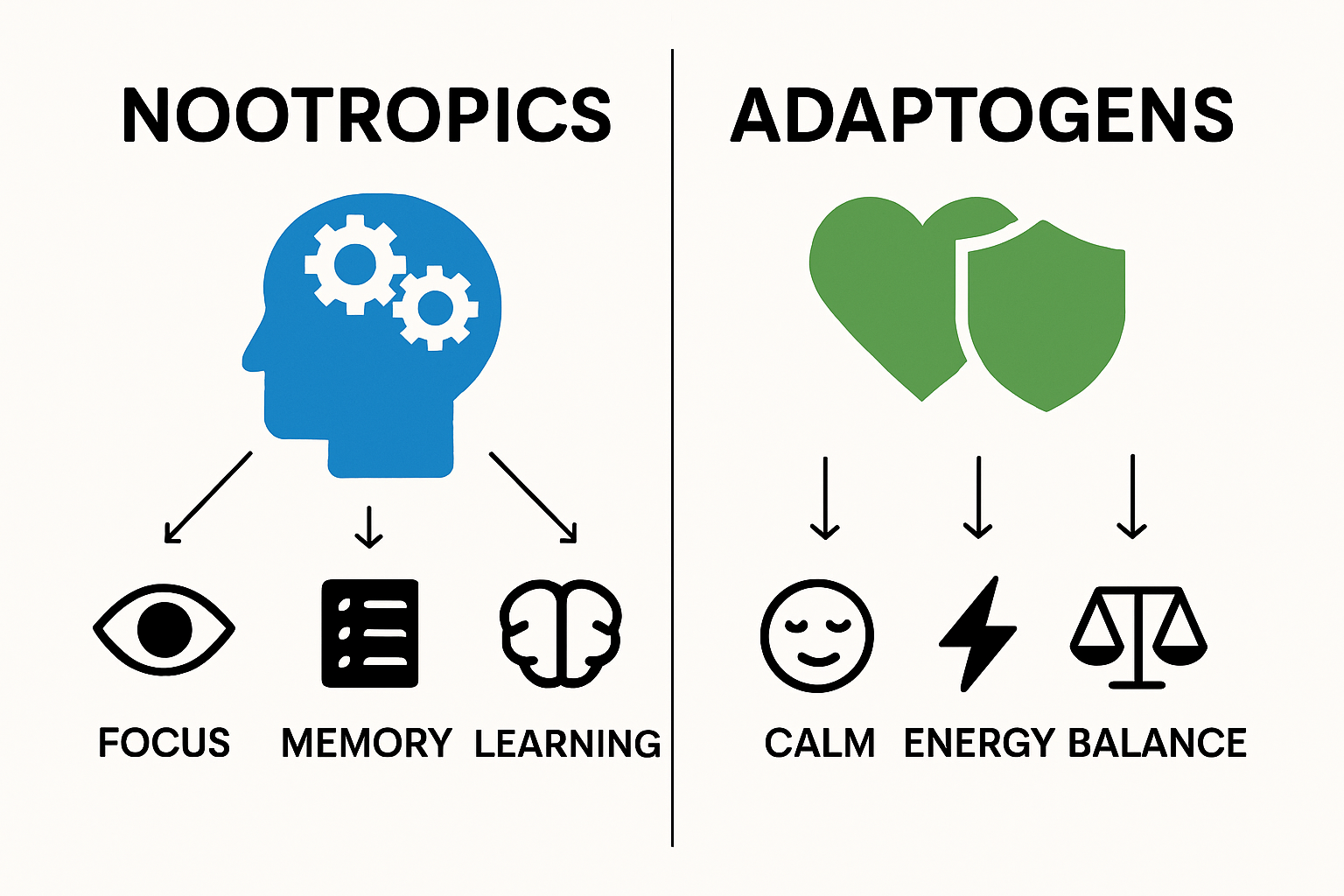
The intricate interactions of nootropics and adaptogens with human physiology reveal complex pathways of bodily and mental response. Understanding their nuanced effects requires exploring how these substances engage with our biological systems at molecular and systemic levels.
Research from the National Institutes of Health demonstrates that nootropics and adaptogens interact with the body through distinctly different mechanisms. Nootropics primarily target neurological systems, directly influencing brain chemistry and cognitive processing, while adaptogens modulate broader stress response networks.
Nootropic effects on the body include:
The biochemical pathways activated by these compounds reveal their unique approaches to wellness. Adaptogens work by:
While both nootropics and adaptogens aim to support overall wellness, they do so through fundamentally different biological strategies. Nootropics act more directly on cognitive processes, potentially improving mental performance, memory, and focus. Adaptogens, conversely, provide a more holistic approach by helping the body resist and recover from physical, chemical, and biological stressors.
Individual responses to these compounds can vary significantly based on personal biochemistry, existing health conditions, and overall physiological resilience. This variability underscores the importance of personalized approaches and professional guidance when considering their use.
Understanding the precise contexts where nootropics and adaptogens can be most beneficial requires a nuanced approach to personal wellness. These compounds are not universal solutions but targeted interventions designed to support specific physiological and cognitive needs.
Research from the National Institutes of Health illuminates the distinct scenarios where nootropics and adaptogens can be most effectively deployed. Nootropics are particularly suited for situations demanding heightened mental clarity and focused cognitive performance.
Ideal nootropic application scenarios include:
Adaptogens excel in scenarios involving prolonged stress and physiological resilience, offering a more comprehensive approach to wellness management. These compounds are particularly valuable during:
While both nootropics and adaptogens can contribute to overall well-being, their application is not interchangeable. Nootropics target specific cognitive functions with more immediate, performance-oriented outcomes. Adaptogens, conversely, work more subtly to restore bodily equilibrium and support long-term stress resistance.
Critical considerations for both include individual biochemical variations, potential interactions with existing medications, and the importance of professional medical consultation. Personal health history, current physiological state, and specific wellness goals should always guide the decision to incorporate these compounds into one’s health regimen.

You have just explored the differences between nootropics and adaptogens, learning how each supports your goals for sharper focus, reduced stress, and greater mind-body resilience. At Baker’s Botanics, we know that many health-conscious individuals struggle to find effective, natural solutions for both cognitive performance and stress relief. Especially if you are seeking menstrual health or longevity support, finding the right herbal supplements can feel overwhelming. Our carefully curated collection of functional mushrooms and wellness products is designed to help you bridge the gap between science-backed education and practical, everyday self-care.
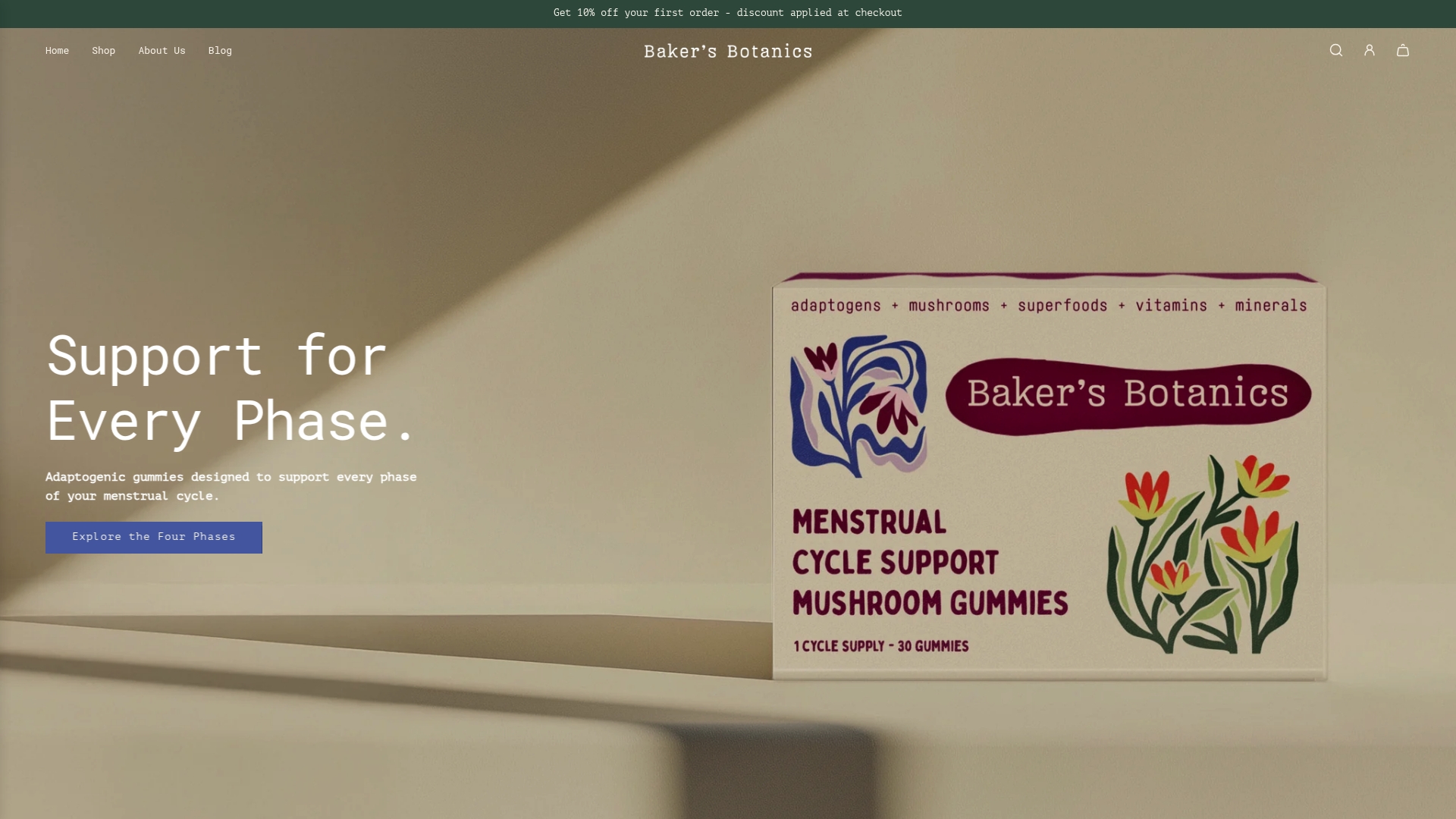
Experience the unique benefits of adaptogenic and nootropic support by exploring our wide range of wellness and mushroom products. Start your journey to renewed energy, balanced stress response, and improved cognitive clarity today. Visit Baker’s Botanics and discover which products are tailored to your exact needs right now.
Nootropics are substances designed to enhance cognitive performance and brain function. Often called ‘smart drugs,’ they aim to optimize mental capabilities in healthy individuals by improving memory, focus, and overall brain health.
Adaptogens are natural substances that help the body manage and respond to stress more effectively. They interact with the body’s stress response systems to promote balance and resilience without causing significant side effects.
The main difference lies in their primary functions: nootropics focus on cognitive enhancement, targeting specific brain functions like memory and focus, while adaptogens concentrate on stress management and overall physiological resilience.
Consider using nootropics during scenarios that demand heightened mental clarity, such as studying or managing complex projects. Adaptogens are beneficial during prolonged stress, helping to support resilience in high-pressure situations.
Sign up to unlock 15% off your first order and get functional mushroom tips, rituals, and product drops straight to your inbox.